Material Guide•9 min read
Choosing the Right Pavers for Sydney Courtyards
Published on 10 December 2025
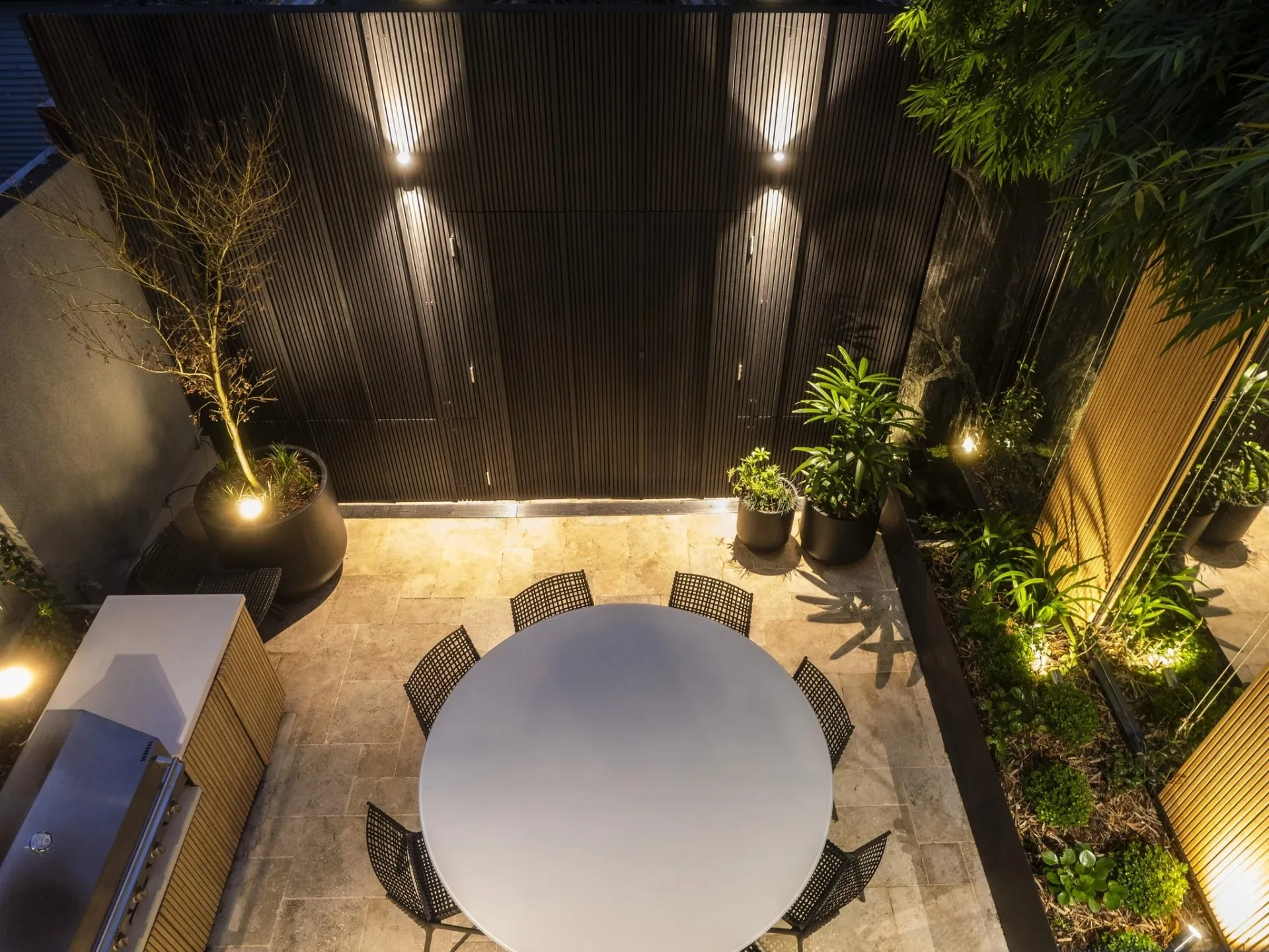
Paving is the loudest decision in a courtyard. It's the largest single surface, it sets the tonal palette, and it's the thing you can't quietly swap out later. Choose carefully - and choose for how the space is used, not only for how the sample looks on the kitchen bench.
Travertine
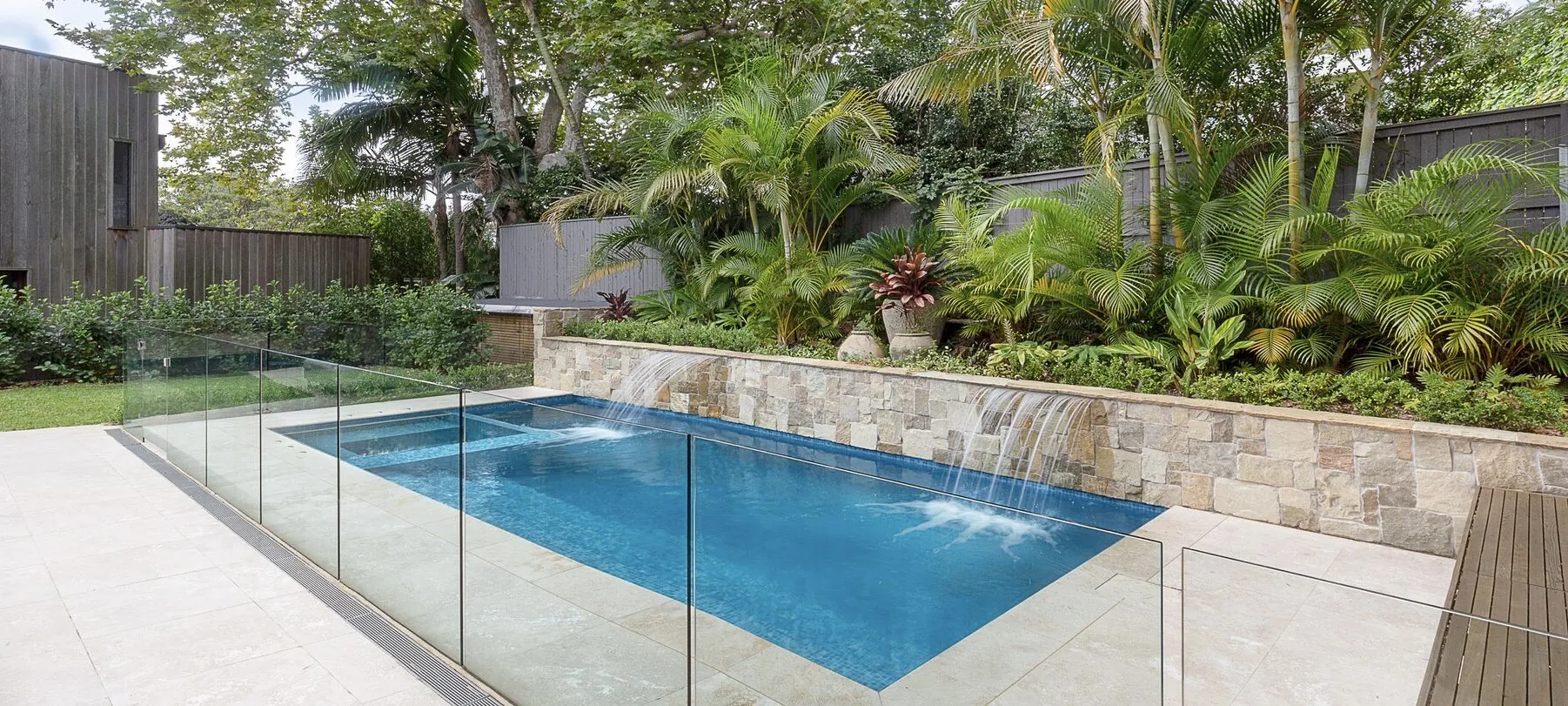
Warm, soft underfoot and noticeably cooler than dark stone in summer - which is why it dominates pool surrounds. Available unfilled (more texture, more grip) or filled and honed (smoother, easier to clean). It is a porous stone, so it wants sealing on installation and roughly every two to three years after, particularly near salt water. Expect $75-$140/m² supply for good-quality stone.
Bluestone
Dense, dark, deeply Sydney. Pairs beautifully with green planting, sandstone heritage walls and dark joinery. Sawn or honed finishes suit contemporary work; flamed gives grip underfoot. It absorbs heat, so it can be uncomfortable barefoot around a pool in full afternoon sun, and lighter-coloured varieties can show 'spotting' from iron content. Expect $70-$120/m² supply.
Porcelain
The pragmatic choice - non-porous, stain-resistant, colour-stable and dimensionally perfect, which means tight joints and a crisp modern read. It never needs sealing and shrugs off wine, sunscreen and leaf tannin. The trade-offs are that it looks like what it is up close, and 20mm pavers need a properly prepared base; cutting is slower and more expensive. Expect $60-$130/m² supply.
Sandstone
The local material, and unbeatable where the house or boundary walls are already sandstone. It weathers softly and feels right in heritage and harbourside settings. It is softer than the alternatives, holds moss in shaded damp courtyards, and benefits from sealing. Reclaimed sandstone carries a premium but is worth it on the right site.
Granite
Extremely hard-wearing and the most forgiving in high-traffic driveways and entries. Flamed granite gives excellent slip resistance. Its limitation is aesthetic rather than technical - the speckled grain is less quiet than travertine or porcelain in an intimate courtyard.
Matching the material to the space
- Pool surround: travertine or light porcelain - cool underfoot, non-slip finish, P4/P5 rating.
- Shaded south-facing courtyard: pale porcelain or light travertine to bounce what light there is.
- Heritage terrace: sandstone or bluestone, laid in a format that suits the house.
- Driveway or high-traffic entry: granite or 30mm+ bluestone on a concrete base.
- Outdoor kitchen zone: porcelain, every time - it survives oil, wine and heat.
Buy the base, not the paver. The most expensive stone in Sydney will still fail on a poorly prepared sub-base.
Format, laying pattern and joints
Larger formats (600x600, 800x400, 1200x600) make small courtyards read bigger because there are fewer joint lines. Running bond suits long narrow spaces; stack bond and French pattern suit square courtyards. Joint width matters more than people expect - 3-5mm with a coloured jointing compound reads contemporary, 8-10mm reads traditional.
Slip resistance and compliance
Around pools and on external steps, ask the supplier for the slip rating. P4 or P5 (or R11 barefoot ratings) is what you want in wet areas. It is a specification detail that costs nothing to get right at selection and is impossible to fix afterwards.
Sealing and maintenance
Porous stone - travertine, sandstone, some limestone - should be sealed on installation with a penetrating sealer, then resealed every two to three years. Porcelain needs nothing beyond washing. All paving benefits from an annual clean before the joints go green over winter.