Design Guide•9 min read
Designing for Sydney's Climate & Aspect
Published on 12 April 2026
Every Sydney site has a personality long before we walk it. Northerly aspects hold sun deep into winter. Eastern Suburbs gardens shoulder salt-laden southerlies. Inner-city courtyards trap heat against brick and hold it well past sunset. The first move in any good landscape isn't a plant choice - it's a reading of the site.
Sydney is not one climate. A Mosman harbour-front garden, a Darlinghurst courtyard and a North Turramurra bush block sit within 20km of each other and behave nothing alike. Getting the read right at the start is what stops a garden being fought with for the next decade.
Start with the sun
Map your sun arc across summer and winter. In Sydney the summer sun rises well south of east and passes almost overhead at midday; in winter it tracks low across the north. That difference is why a north-facing pool deck can be brutal in February and golden in July, and why a south-facing courtyard can sit in shadow from April to September unless the boundary treatment is designed to bounce light.
- North: the premium aspect. Sun year-round, needs summer shade - pergola, louvred roof or a single well-placed canopy tree.
- East: morning sun, cool afternoons. Ideal for breakfast terraces and lawn.
- West: hot late-afternoon sun in summer. Screening, deciduous planting and heat-tolerant paving matter here.
- South: cool and shaded. Reflective render, pale paving, structural foliage and lighting do the heavy lifting.
Wind, salt and the coastal edge
Anywhere east of the city or on an exposed headland, the southerly buster and salt spray set the plant list before aesthetics do. Salt burns soft foliage, corrodes fixings and shortens the life of poorly specified metalwork. On coastal sites we specify marine-grade stainless, powder-coat over hot-dip galvanised steel, and planting that has already proven itself: Westringia, Banksia integrifolia, Correa, coastal rosemary and Lomandra.
Heat and the inner-city courtyard
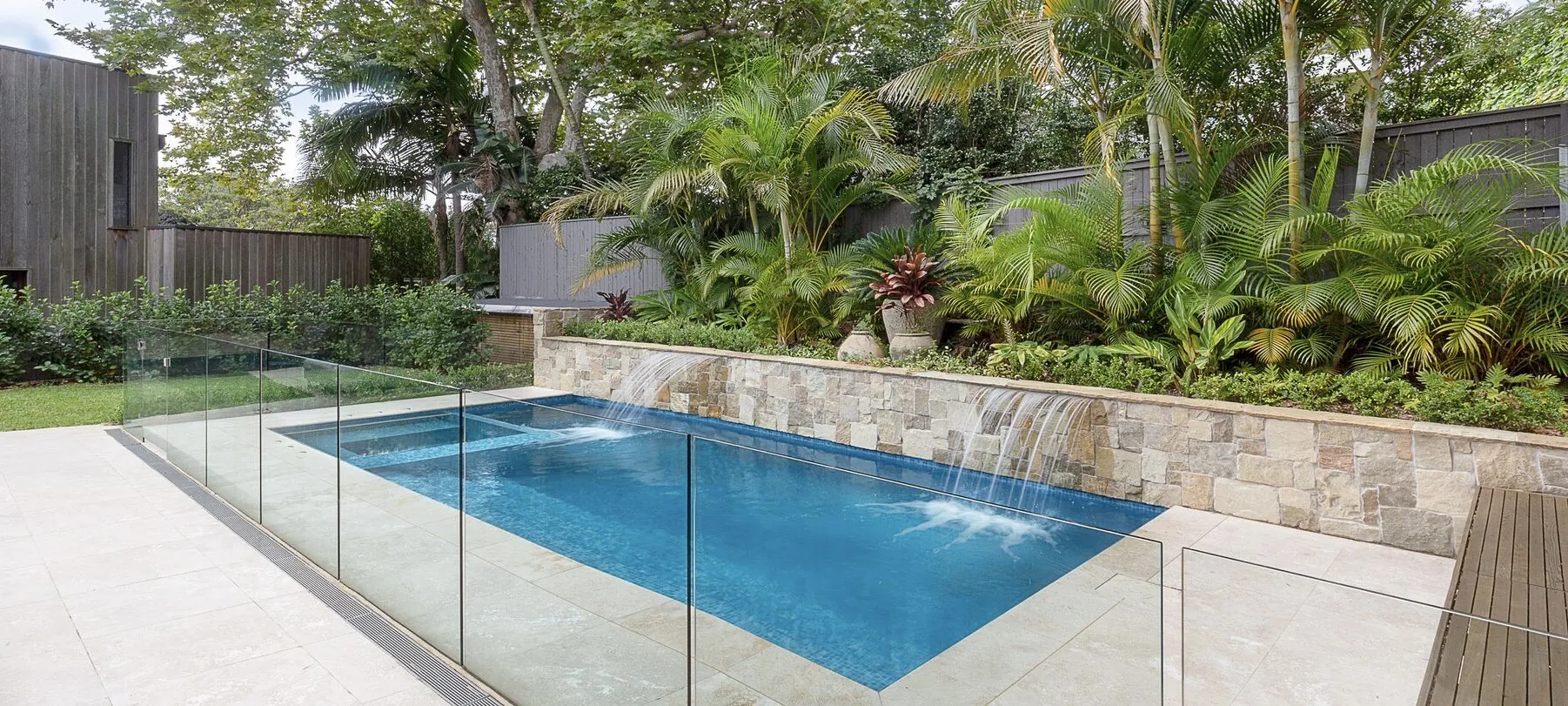
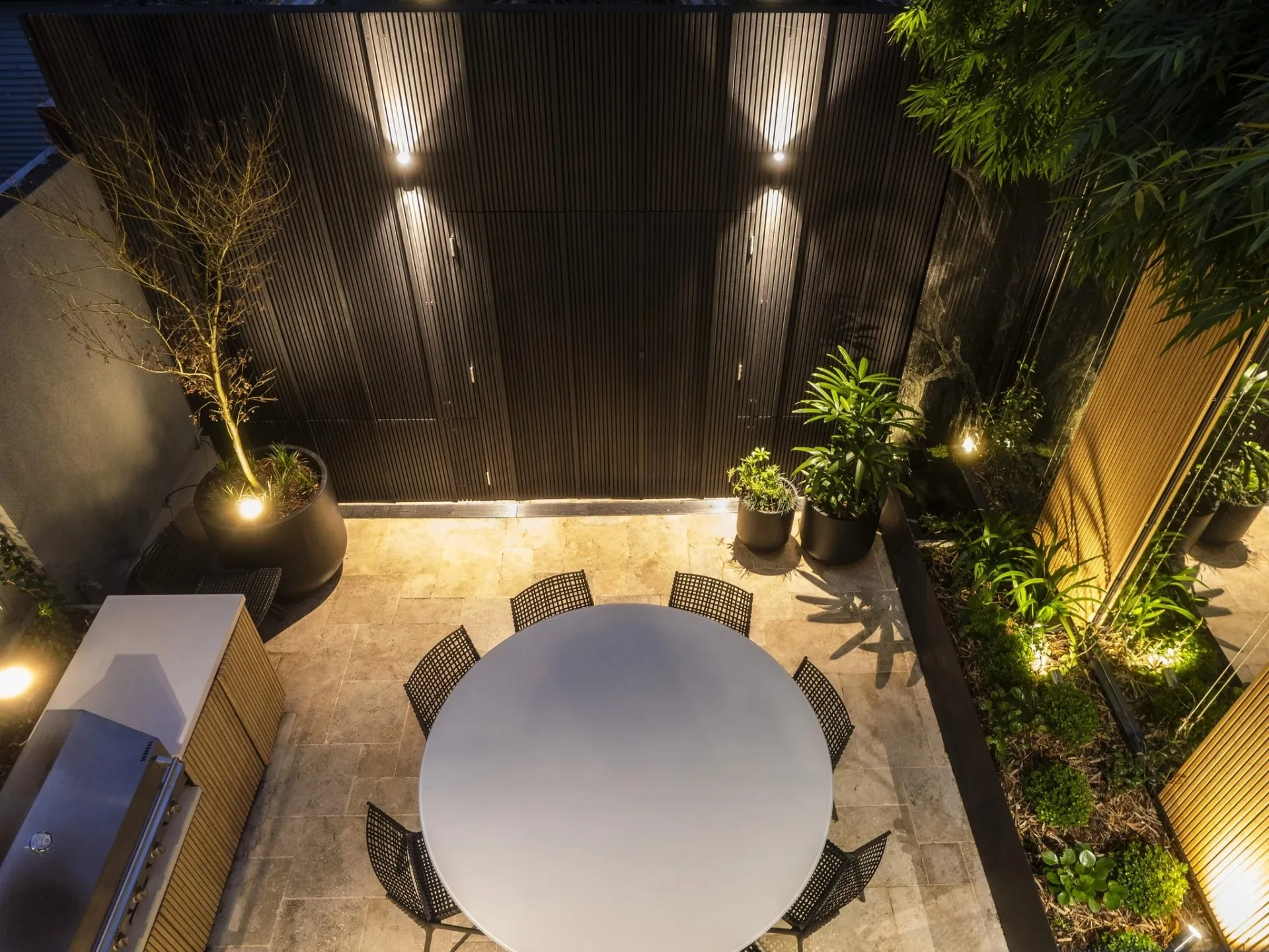
Brick, render and paving all store heat. A small courtyard surrounded by two-storey walls can run several degrees warmer than the street at 8pm in January. The fixes are consistent: pale or lightly textured paving instead of dark absorptive stone, planting mass on at least one boundary, a canopy tree or vine to break the overhead plane, and water if the budget allows - even a small spill wall changes how a space is perceived.
Water: too much, then not enough
Sydney's rainfall arrives in bursts. A garden must handle 100mm in a day and then five weeks without. That means real drainage design - falls, subsoil lines, charged systems where levels are tight - paired with soil preparation deep enough to hold moisture through a dry spell. Most planting failures we're asked to fix are drainage or soil failures wearing a plant's name.
Plant for the long game
Native species like Lomandra, Westringia, Banksia and Dianella thrive once established, drink little, and look better with age. We pair them with structural exotics - Magnolia 'Little Gem', Buxus, olive, frangipani - for year-round form. The goal is a scheme that reads deliberate in year one and generous in year ten.
Good gardens reveal themselves slowly. Great gardens are designed for the way light falls in fifteen years, not fifteen days.
A short site-reading checklist
- Photograph the space at 9am, midday, 3pm and dusk in both summer and winter if you can.
- Note where wind arrives from and what it does to the space you want to sit in.
- Watch where water pools after heavy rain - that is your drainage brief.
- Identify existing trees worth keeping; their root zones will shape the plan.
- Check what the neighbours' upper windows see, and what you see from your kitchen.